
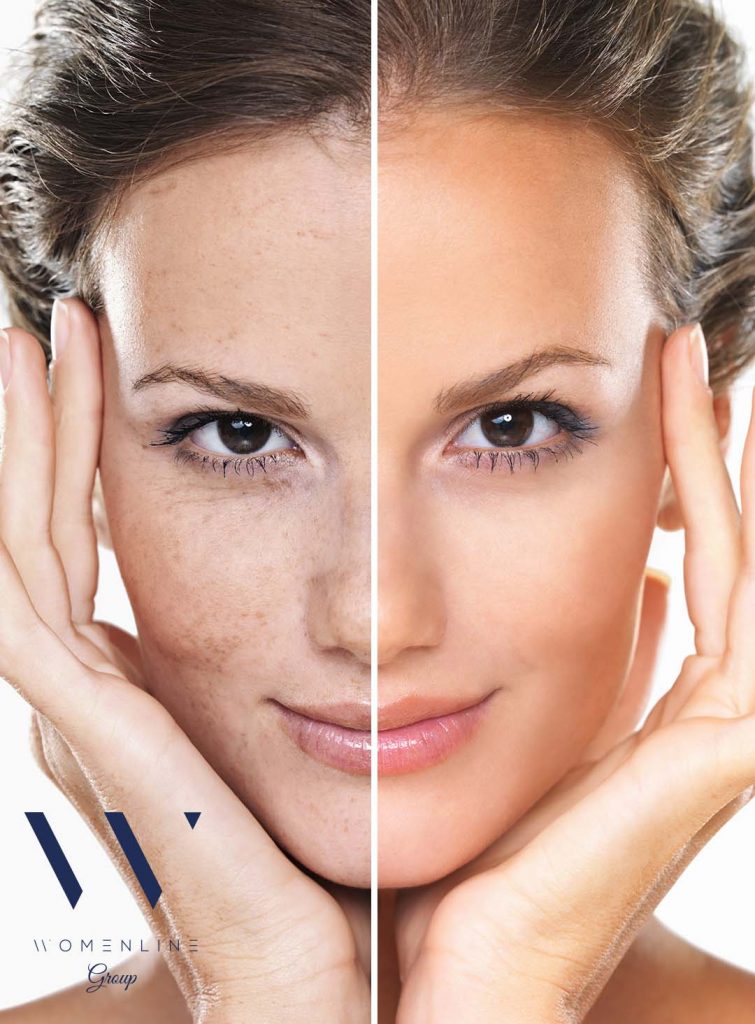
Hyperpigmentation (CPL/ND:YAG)
Laser removal of discolouration is an effective method of eliminating these unattractive lesions resulting from excessive melanin production. Laser devices provide a safe, non-invasive, painless and quick way to get rid of pigmented lesions. They are an excellent alternative to chemical peels or cryotherapy.
The treatment involves a controlled amount of micro-damage to the skin and their precise placement. The laser light heats up the pigment cells and damages them. They are then removed from the body. After treatment, the pigmentation usually darkens initially, but fades or disappears after about two weeks. Laser therapy is a very effective method of treating hyperpigmentation. It allows precise removal of pigmented lesions while refreshing and rejuvenating the skin.
After cleansing and degreasing the skin, the light beam emitted by the laser is directed at the skin.
The light emitted by the laser precisely targets the problematic area of skin where pigment has accumulated. In this way, lasers only act on the lesion and do not damage the surrounding tissues. Several treatments are necessary to achieve the desired effect. The number of treatments depends, among other things, on the size of the lesion and the intensity of its pigmentation. The individual series are carried out at intervals of several weeks (on average every six weeks).
Laser removal of hyperpigmentation is a treatment for people who want to get rid of it:
- seborrhoeic discolouration,
- lenticular spots,
- stains caused by photosensitising drugs,
- hormonal changes (pregnancy, menopause, taking contraceptives).
Additional indications for laser hyperpigmentation removal include freckles, age spots, acne spots, photoageing, post-inflammatory hyperpigmentation and mottled pigmentation.
After laser spot removal, the patient should be careful not to irritate the treated area. He must not use soap or cosmetics containing alcohol for the next few days. He should not undergo any exfoliating treatments, including peels. It is advisable to refrain from sunbathing for one month, from saunas and hot baths for a fortnight and from exercise for one week. After treatment, the skin should be moisturised several times a day and photoprotection should be applied.
Despite its numerous indications and high level of safety, laser hyperpigmentation removal should not be performed if there is inflammation in the treatment area or an active viral or bacterial infection, connective tissue disease or a compromised immune system. Other contraindications include pregnancy, cancer, use of photosensitising medication, epilepsy, steroid intake and fresh tan. People prone to scarring, vitiligo and psoriasis should not undergo laser treatments. Electronic/metal implants may also be a contraindication.
It is important to note that any skin lesions that are suspicious to the doctor cannot be removed by laser. Such lesions should be surgically removed with a margin (reserve) of healthy tissue and then subjected to histopathological examination to exclude melanoma, basal cell carcinoma of the skin or inflammatory infiltrates, among others.
Skin irritation at the treatment site, use of photosensitisers (vitamin A derivatives, antibiotics of the tetracycline group, St. John's wort, calendula) are also contraindications to the procedure.
You will find the current price list here.