
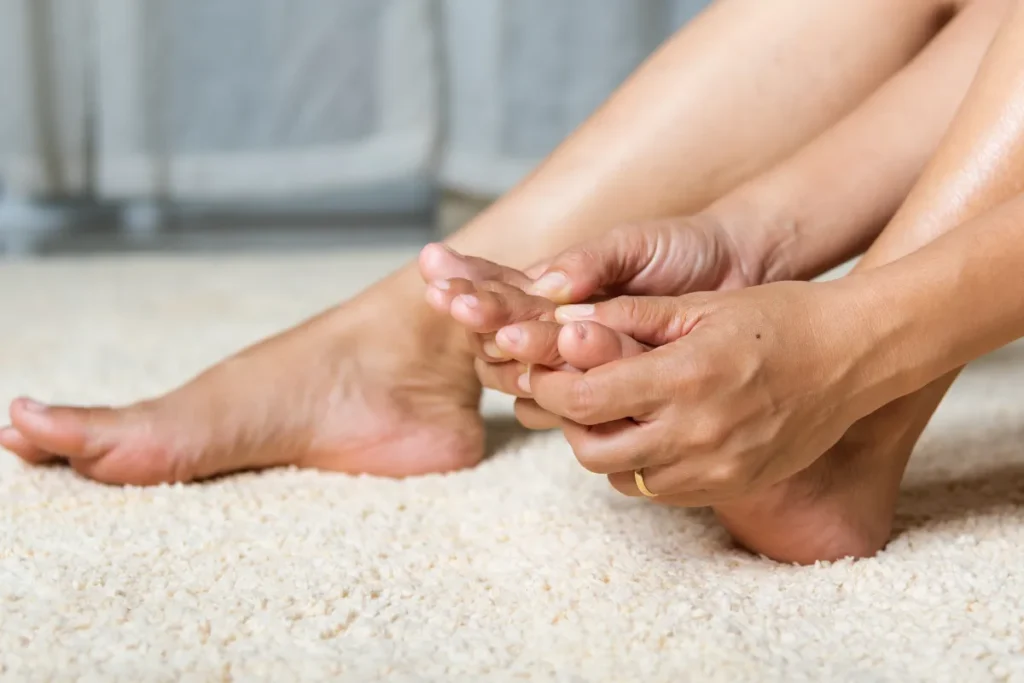
Nail fungus laser therapy (ND:Yag)
Does laser really work for nail fungus?
The laser light penetrates the nail plate without damaging the nail or the surrounding skin, but kills the fungi underneath the nail plate. In this way, it gets to the source of the problem and prevents the disease from developing. Its effectiveness has been confirmed by clinical studies.
Nail fungus is the most commonly diagnosed condition affecting the foot area. Once known as a rare condition, however, recent studies indicate that the incidence of onychomycosis is steadily increasing. Toenails are more susceptible to fungal infections than toenails. It is estimated that approximately 2-3% of the population is affected, and this percentage steadily increases with age. Nail fungus is sometimes underestimated because it produces no symptoms for a long time and is painless (until the nail plate becomes crusted and thus the skin becomes more sensitive). It attacks the skin and nails and, if untreated, spreads to other fingers, leading to deformation of the plate, itching and burning.
People affected by nail fungus are forced to avoid public showers, swimming pool visits, refrain from buying open-toed shoes, etc.
Treatment options for onychomycosis to date include palliative treatment, mechanical or chemical cleansing, systematic use of antifungal agents and various combinations of these.
Treatment of onychomycosis with an Nd:YAG laser emitting light at 1064 nm is a relatively new therapeutic method that offers surprisingly good results.
Experts at Biotec Italia have developed a treatment for nail fungus using the XLase Plus laser platform, with a special Nd: YAG laser head. The long pulse of the Nd:YAG laser has a significant effect on reducing the phenomenon of nail fungus and improving the appearance of the nails. The Nd:YAG Xlase Plus laser destroys the fungal hyphae, which are the main cause of nail fungus, at a high temperature. The desired average temperature of the fungal nail tissue irradiated with the laser is approximately 43-51°C and the treatment time is at least 2-3 minutes. Such parameters ensure an adequate therapeutic dose. Tolerance to higher temperatures is possible with prior application of an anaesthetic cream or with increased blood flow. Appropriate laser energy can eradicate up to 80-99% of microorganisms present in the infected nail. This dose will not kill the fungal colonies immediately, but will damage their ability to react or survive. As a result, the nail plate grows back healthy and strong.
Nail fungus is an infection mainly affecting the lower limbs, developing in a moist and poorly ventilated environment. In order for nail fungus therapy to have the desired effect, it is important that patients are informed about what they need to do for the therapy to be effective.
Nd. -Yag Xlase Plus destroys the mycelial hyphae, which are the main cause of mycosis development, under high temperature. The desired average temperature of the laser-irradiated nail tissue with mycosis is approximately 43-51°C and the treatment time is at least 2-3 minutes.
The laser treatment of nail fungus is short and painless, with patients feeling only warmth on the treated area. Most importantly, the infection is removed without the risk of damaging the nail and finger skin.
Results from a number of clinical studies of Nd:YAG laser therapy for the treatment of onychomycosis on different patient groups: with four treatment sessions performed weekly, follow-up after several months showed results similar to 99% laser beam efficacy on fungal colonies located in the toenail area.
Nail fungus is an infection mainly affecting the lower limbs, developing in a moist and poorly ventilated environment. In order for the treatment of onychomycosis to be effective, it is important that patients are informed about what they need to do to make the treatment effective
- washing feet at least once a day
- thoroughly dry feet, especially between toes
- wearing lightweight shoes or sandals made of natural materials
- using socks made only of natural fibres - silk, cotton and wool
- use of lubricants for 24 hours
- avoid the use of alcohol-based drying agents
- do not engage in strenuous physical exercise for one week after surgery
- refrain from saunas and hot baths for 14 days,
- it is recommended to avoid sunbathing for one month
The laser treatment allows for an effective therapy against foot fungus. A series of 2 to 4 treatments every 6 to 7 days is recommended.
You will find the current price list here.