
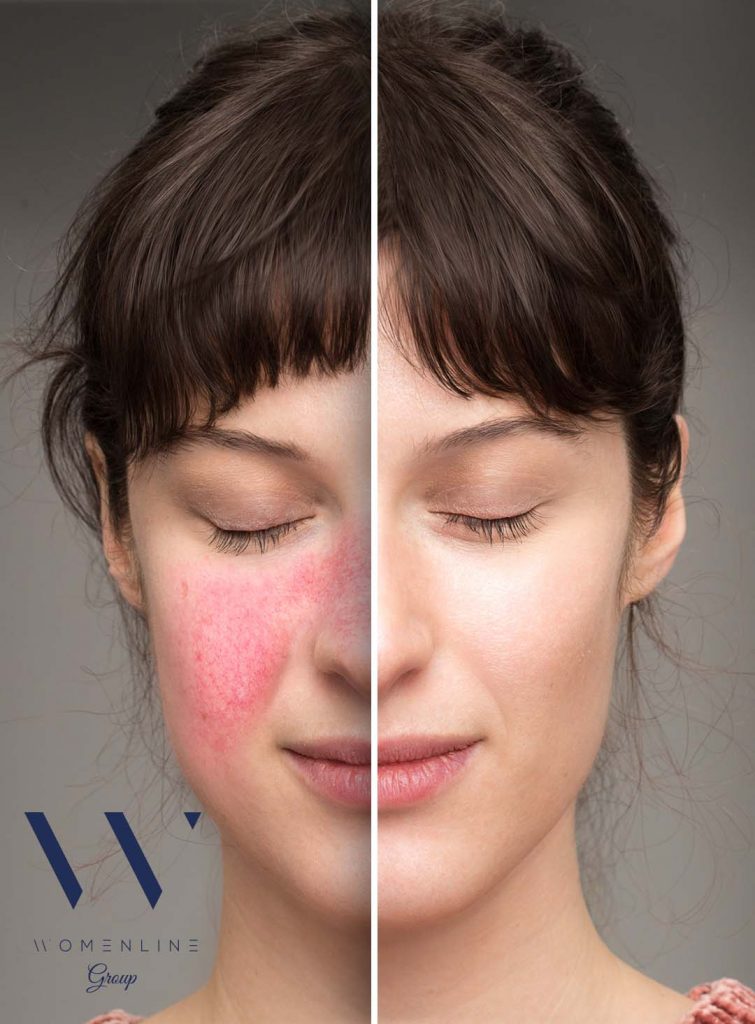
The possibility of removing blood vessels and spider veins without damaging the surrounding skin! Thanks to the laser, the precise removal of capillaries is quick and almost painless. The laser penetrates into the vascular lesions and closes them. In the process of selective photothermolysis, haemoglobin (the pigment of red blood corpuscles) captures the laser light. Under its influence, the blood water in the damaged vein evaporates, the vessel walls disintegrate and are absorbed by the body. In the case of a spider vein, the lesions appear immediately, while other vascular lesions fade and over the next few weeks the vessel will disappear and all blood will be removed by the body's cleansing cells.
Our laser treatments allow a precise dose of energy to be delivered to each blood vessel without damaging nearby structures.
Treatments performed with the Xlase laser enable:
- Closing of blood vessels (so-called cobwebs)
- closure of spider naevi (so-called spider nevus)
- closure of a cherry angioma (campbell de morgana spot)
- Treatment of vascular lesions
- Spider veins and spider veins on the face (cheeks, temple area, back of nose, forehead) and legs.
- Vascular nevi (capillary malformation), varicose veins, facial veins (telangiectasia).
- Haemangioma (vascular tumour). Pulses of laser light target the red pigment (haemoglobin). Typical settings used to treat facial veins.
The Nd:YAG laser penetrates superficial blood vessels. The heat generated by the laser coagulates the blood inside the vessel, causing it to collapse and seal.
We suggest four laser sessions, but for simple vascular lesions the results will be visible after just one treatment.
What are the benefits of Nd:Yag laser treatments?
Skin rejuvenation - Stimulation of collagen production.
Improves skin tone and firmness.
Helps reduce the appearance of wrinkles and fine lines.
Helps to reduce enlarged pores.
Helps reduce vascular nevi (capillary malformations), varicose veins, facial veins (telangiectasias), hemangiomas (vascular tumours).
Hair removal anywhere, including underarms, bikini area, face, neck, back, chest and legs.
Helps reduce acne scars.
It helps remove brown age spots (lentigines), freckles, Ota moles, Ito moles, lumbar melanocytosis, Hori moles and café-au-lait spots.
It helps to reduce excessive activity of the axillary sweat glands by irradiating the glandular tissue.
Nd:YAG laser pierces the skin and penetrates the superficial blood vessels. The heat generated by the laser coagulates the blood inside the vessel, causing it to collapse and seal.
Shortly after the treatment, a slight thickening may appear on the skin, which will disappear over the next 2-4 hours. The area may also appear slightly redder and may sometimes be bruised.
Over the next few weeks, the vessel will disappear and all the blood will be removed by the body's cleansing cells.
Newer laser treatments allow a precise dose of energy to be delivered to each blood vessel without damaging nearby structures.
Possible feelings and care after Nd:Yag laser treatment Redness
It is normal that the treated area will feel a slight burning and redness for a few hours. If necessary, apply a cold compress or cold water spray. You can also expect redness and/or staining of the treated area for five to seven days.
Bathing / activity
Avoid bathing in very hot water, strenuous exercise and massage for 2-3 days after laser treatment.
Washing
Wait at least 12 hours (the next morning) to wash your face. Your therapist should recommend cleansing your face with a mild cleanser. The cleanser should be used throughout the healing process.
NO Use any scrubs or irritants such as Retin-A, benzoyl peroxide or any astringents. The skin should always be patted dry and NOT rubbed.
Moistening
Use moisturising creams or home care products recommended by your therapist several times a day to keep your skin well hydrated. Using the right products will aid the healing process beneficial to laser skin rejuvenation. This can prevent flaky skin.
Make-up
Make-up should not be applied for at least 5 days after the procedure. If make-up is absolutely necessary, we recommend using only mineral make-up to reduce the possibility of infection.
Avoid exposure to the sun
Avoid direct sun exposure and tanning beds for at least 1-2 months after treatment to reduce the risk of skin discolouration and prevent peeling. Only mineral make-up can be worn as sun protection during the healing process, but make sure your make-up is new and your brush is clean. Sun exposure delays the healing process. Sun exposure can damage healing skin and cause excessive pigmentation and texture changes that can be permanent.
Smoking ban
Smoking increases the risk of postoperative complications. DO NOT smoke for 48 hours before and at least 7 days after surgery, otherwise healing time may be prolonged.
1. Pregnancy, breastfeeding, postpartum period
2. active cancer (current chemotherapy or radiotherapy)
3. hormone treatment
- individual hormone therapy
- treatment of infertility
- treatment of thyroid diseases
4. medicines used
- antibiotics (the interval between the last dose and treatment is at least 4 weeks)
- anticoagulants (blood thinners)
- aspirin
- retinoids (interval between last dose and treatment is at least 6 months)
- photosensitizers
5. cosmetics from:
- retinol
- Vitamins A, C and E
- fruit acids
6. Herbal remedies used need to be discontinued one week before
- St. John's wort, marigold
- herbal slimming teas
- herbal antidepressants
7. tanning
- sunbathing
- solarium (discontinue use 4 weeks before treatment)
- self-tanning creams (discontinue use 4 weeks before treatment)
8. preparations with an exfoliating effect should be discontinued one week before treatment
9. blood coagulation disorders
10. untreated diabetes
11. scarring in the interview
12. hypertension
13. Dermatological skin lesions
- herpes
- inflammation
- moles (moles, beauty marks, etc.)
- photodermatoses (hypersensitivity of the skin to the sun)
- eczemas
- discolorations
- psoriasis
- reticularis (mottled skin)
- vitiligo (relative contraindication)
14. open wounds
15. allergic skin lesions
16. Epilepsy (relative contraindication)
17. HIV
18. pacemaker
19. alcohol (24 hours before and after treatment)
You will find the current price list here.